Manufacturing operations
Connect the plant floor to decisions that move production.
Tech Ops PH builds practical manufacturing systems with Odoo as the operating backbone, then adds automation, AI enablement, and computer vision where they improve control, traceability, and response time.
The goal is not more software on the shop floor. It is one dependable operating flow from product specifications and raw material to production, quality, delivery, and management visibility.
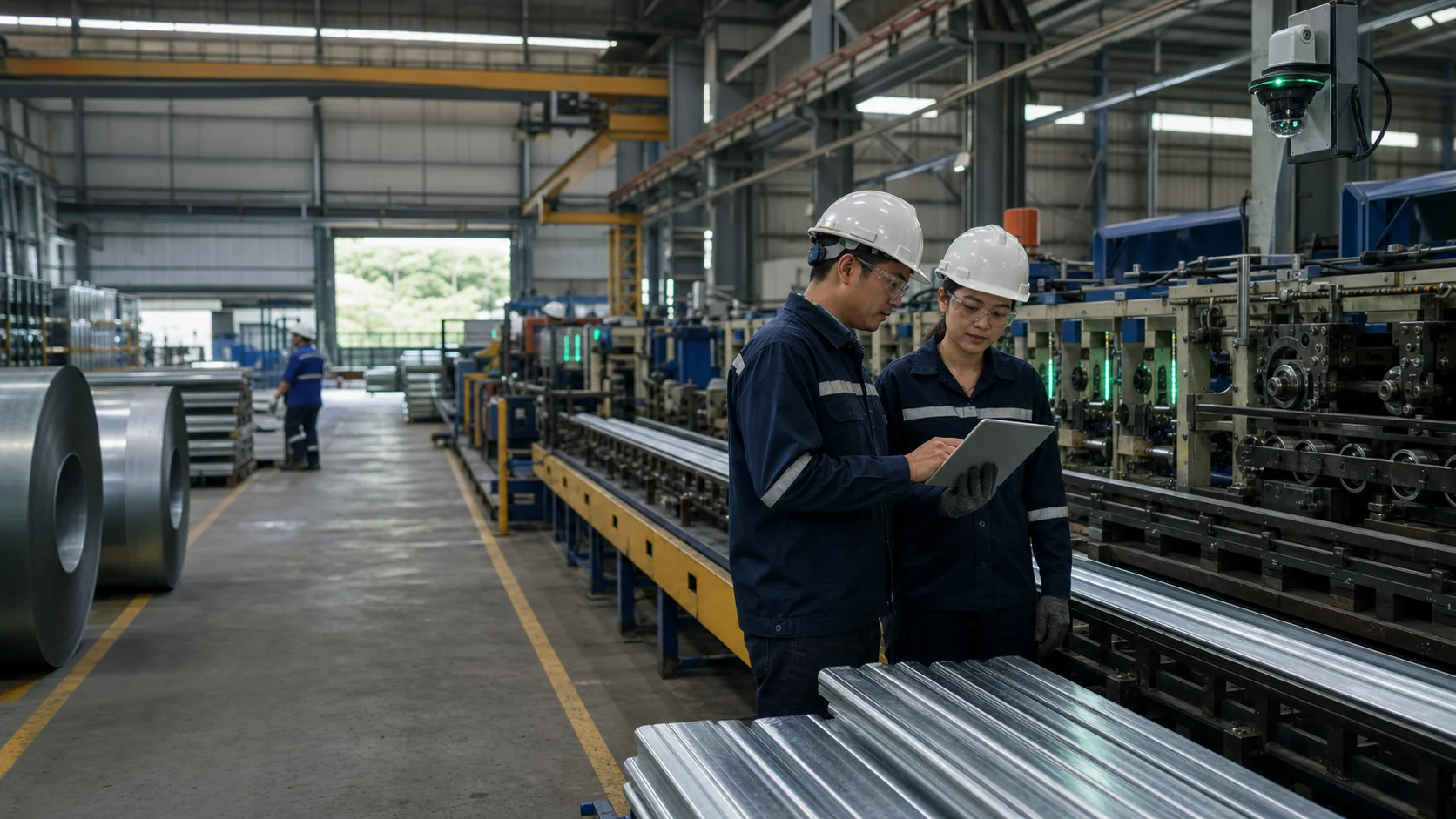
One connected operations stack
- Odoo keeps the operational record.
- Automation connects events and handoffs.
- AI helps teams interpret and prioritize.
- Computer vision turns visual checks into usable evidence.
Capability architecture
Start with the operating backbone. Add intelligence around real work.
Manufacturing technology creates value when every layer has a defined job. Odoo owns the business transaction and traceability. Integrations move trusted events. AI and vision support specific decisions without becoming a disconnected experiment.
Design principle
Keep operators in control, keep exceptions visible, and keep every important action traceable to a production record.
Odoo foundation
Operational system of record
Products, specifications, BoMs, lots, inventory, manufacturing orders, quality, maintenance, delivery, costing, and reporting.
Explore Odoo consultingAutomation
Connected events and handoffs
Odoo automations, n8n workflows, APIs, machine or sensor signals, approvals, alerts, document generation, maintenance escalation, and scheduled reporting.
Explore automationAI enablement
Faster interpretation
Planning support, exception summaries, document extraction, demand signals, knowledge assistance, and recommended next actions.
Explore AI OpsComputer vision
Visual evidence at scale
Counting, dimensional checks, label verification, defect detection, visual traceability, and review-ready image evidence.
See the vision approachAnonymized steel-operations scenario
Make physical material behavior visible inside Odoo.
For a steel-products manufacturer, standard ERP quantities were not enough. Operations needed the system to understand product section, thickness, reference length, standard weight, actual handled quantity, and the difference between an estimate and the final physical result.
Approved references hold product type, section size, thickness, length, basis quantity, and expected weight.
Odoo resolves the correct weight reference from the steel product's attributes, with a controlled override when required.
Open transfers show an expected weight; completed quantities preserve the final operational result in kilograms.
The same normalized weight source supports transfer totals, delivery documentation, and inventory reporting.
Problem
The system quantity did not express the physical reality.
Steel products vary by profile and specification, while actual handling introduces weight differences that matter to inventory, delivery, and commercial control.
Intervention
Extend Odoo around the manufacturer's own standards.
We kept client-specific logic in a separate first-party addon, linked products to governed chart data, and normalized the operational calculations to kilograms.
Operational result
One weight logic from planning through delivery.
Users can see expected and final weight at line and transfer level, while delivery and inventory outputs use the same controlled reference.
End-to-end operating flow
Build around the production decision, not the app menu.
A manufacturing solution should connect the commercial promise, material decision, production event, quality evidence, and delivery result. That is where Odoo, automation, and intelligent tools become one operating system instead of separate projects.
- 01Demand and specificationsCapture the product, dimensions, quantity, due date, and customer commitment.
- 02Material and production planCheck availability, lots, BoMs, expected consumption, and production priorities.
- 03Execution and traceabilityRecord material movement, work progress, output, scrap, downtime, and responsible operators.
- 04Quality and visual evidenceCapture inspections, measurements, nonconformance, images, and approval decisions.
- 05Delivery and learning loopProduce controlled documents, reconcile actuals, surface exceptions, and improve the next plan.
AI and computer vision enablement
Turn more plant-floor signals into reviewable operations data.
These capabilities are introduced only after the operating record, camera conditions, data quality, exception owner, and approval boundary are clear. In the anonymized steel case, they represent the next-stage capability path, not a claim that every item was already deployed.
Apply confidence thresholds and retain the source evidence.
High-value starting points
- Count bundles, pieces, or staged material.
- Compare visible dimensions or profiles to the expected specification.
- Verify labels, heat or lot references, and packaging.
- Flag surface defects for quality review.
- Extract values from mill certificates and inspection documents.
- Summarize production and exception queues for supervisors.
Manufacturing engagement path
Prove value in one operating loop, then scale.
A focused pilot should leave behind a stronger process and reusable system foundation, not a disposable demonstration.
Discover
Map the physical and digital flow.
Follow one product family from demand to delivery, including exceptions, measures, documents, and ownership.
Design
Define the system boundary.
Decide what Odoo owns, what must integrate, where automation helps, and which decisions stay human.
Pilot
Deliver one measurable operating loop.
Use representative materials, operators, devices, and exceptions before expanding the design.
Scale
Harden controls and adoption.
Add product families, work centers, quality points, integrations, reporting, training, and support in stages.
Manufacturing operations FAQ
Practical answers before a plant workflow review.
The right starting point depends on the manufacturing constraint, existing systems, data readiness, and the operating team that will own the result.
What manufacturing operations can Tech Ops PH support?
We support product and material masters, bills of materials, inventory and lot traceability, production planning, work orders, quality controls, maintenance, delivery, costing, reporting, and controlled integrations.
How does Odoo fit into the solution?
Odoo can serve as the operating backbone for production and its connected commercial, inventory, quality, maintenance, delivery, accounting, and reporting records. We configure and extend that backbone around the plant's actual controls.
Where can automation help?
Automation can reduce repeated encoding and delayed handoffs across approvals, production updates, quality exceptions, machine or sensor events, maintenance requests, delivery documents, alerts, and reporting.
How can AI and computer vision be used?
AI can assist with planning, documents, forecasts, summaries, and next actions. Computer vision can support counting, dimensional checks, defect detection, label verification, and visual traceability when the use case and review process are ready.
Does this replace operators with AI?
No. We design operator-led systems. AI and vision surface signals, evidence, and recommendations while people remain responsible for production, quality, safety, and approvals.
Start with one production constraint
Where is manufacturing losing visibility, time, material, or control?
We can review the current workflow, Odoo fit, integration points, data readiness, AI opportunities, and computer-vision feasibility before recommending a delivery path.